Missionsvennen

Notes on church order in the Norwegian Lutheran Synod

From Norwegian American Lutheranism Up To 1872 by J. Magnus Rohne, New York, MacMillan, 1926.

IMG_8052 

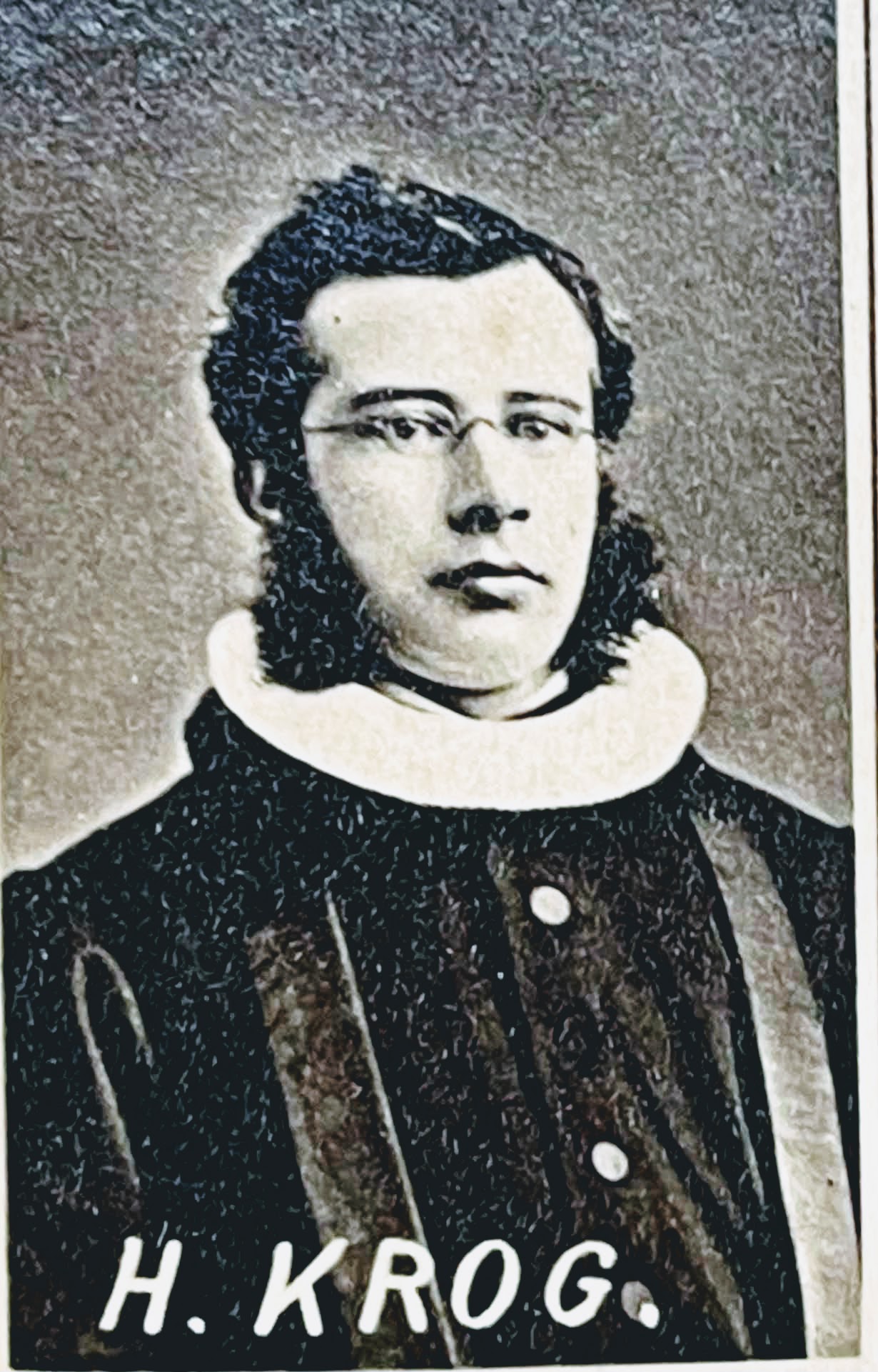
 …the Synod pastors wore the Norwegian clerical garb. This consists of a black gown hanging straight from the shoulders to within a few inches of the floor. Over the gown is a stiffly padded, inch-wide, satin-covered stole, or “yoke,” which hangs around the neck and down both sides of the front the full length of the gown. This stole, or “yoke” was mistakenly taken to symbolize the complete surrender (“going under the yoke”) of the pastor to the sovereign will of God. At the back of the neck, the stole, or “yoke,” is raised somewhat so as to support the white fluted collar or ruff. The ruff, which is three inches wide and one inch thick, is worn Sir Walter Raleigh fashion, over the pastor’s ordinary wing collar, and symbolizes the purity and glory of the pastoral office. This white fluted collar with the black gown gives the pastor a worthy and dignified appearance when he approaches the Altar of God or preaches God’s Word from the pulpit. On the three major church festivals and on other very important occasions, the pastor wore a white surplice over the black gown. It is not until quite recently that the Oxford, the modified-Oxford, and the gown designed by a committee of pastors of the Eastern District of the Norwegian Lutheran Church of America have been regarded as proper pulpit gowns for the Norwegian Lutheran pastor.

Discover more from Missionsvennen

Subscribe to get the latest posts sent to your email.

Leave a comment

Hans Jakob Grøgaard Krog was born in Flekkefjord, Norway. After having obtained his master’s degree, he took up the study of theology but discontinued this, however, and became a teacher in Christiania and later in Trondhjem. Rev. J.A. Ottesen had often written in Norwegian papers concerning the scarcity of clergymen among Norwegians in America, and this led Krog to take up the study of theology anew. In 1872 he emigrated to America and was ordained into the ministry in 1874. His first call took him to Minneapolis, but a year later found him in Menominee, Wis., where he remained until 1890, when the Church Council elected him to a professorship at Luther College, where he remained for six years. He taught Norwegian, Religion, Latin, and French, besides taking, together with his wife, a very active part in the church work in and about Decorah. Rev. Krog was intensely interested in mission work, especially in the seamen’s mission. In 1902 he resigned his pastorate, which he had held at Ossian since 1896, in order to devote all his time to the mission work. In this capacity he labored unselfishly to the last. In the death of Rev. Krog the cause of Christian education has lost one of its warmest friends and supporters and one whose labors and influence have promoted and strengthened the highest and best elements in the field of education.

Hans Jakob Grøgaard Krog

Designed with WordPress