• Erik Pontoppidan – another biography


    Erik Pontoppidan: Danish bishop; b. At Aarhus (on the eastern shore of Jutland) Aug. 24, 1698; d. at Copenhagen Dec. 20, 1764. He was educated at Fredericia (1716-18), after which he was a private tutor in Norway, and then studied in Holland, and at London and Oxford, England. In 1721 he became informator of Frederick Carl of Carlstein (later duke of Plon), and two years later morning preachers in the castle and afternoon preacher at Nordborg. 

    From 1726 to 1734 he was pastor at Hagenberg, where he so protected the pietists as to find it advisable to defend his course against the Lutherans with Dialogues; oder Unterredung Severi, Sinceri, und Simlicis von der Religion und Reinheit der Lehre (1726) and Heller Glaubensspiegel (1727). During this same period he laid the foundation of his later topographical and historical works in Memoria Hasniæ (1729); Theatrum Daniæ (1736); and Kurzgesasste Reformationshistorie der danischen Kirche. Pontoppidan became successively pastor at Hilleröd and castle preacher at Frederiksborg (1734), Danish court preacher at Copenhagen (1735), professor extraordinary of theology at the University (1738), and a member of the mission board (1740), meanwhile writing his Everriculum fermenti veteris (1736) and Böse Sprichwörter(1739).

    In 1736 Pontoppidan was directed by royal rescript to prepare an explanation of the catechism and a new hymnal, and through these two works—Wahrheit zur Gootesfurcht (1737) and the hymnbook (1740)—the pietistic cause in Denmark received powerful assistance. He likewise continued his historical investigations in his Marmora Danica(3 vols., 1739-41; a collection of noteworthy epitaphs and ecclesiastical monuments) and his uncritical Annales ecclesiæ Danicæ (4 vols., 1741-52); and also wrote a novel, Menoza (3 vols., 1742-43), a critique of the religious conditions of Denmark and other countries. In 1747 he was appointed bishop at Bergen, where he introduced many educational reforms, and wrote Glossarium Norvagicum (1749) and Versuch einer naturlichen Geschichte Norwegens (Copenhagen, 1752-53), while his pastoral letters formed in part the basis of his later Collegium pastorale practicum (1757). The antagonism which Pontoppidan roused at Bergen, however, obliged him to go in 1754 to Copenhagen, where he became prochancellor at the university in the following year. But all his plans in this capacity were thwarted by his opponents, and he sought consolation in writing, the results being his Origines Hafnienses (1760) and the first two parts of his Den danske Atlas (1763-67), of which the last five volumes were edited posthumously. He was also active as a political economist, being the editor of Danmarks og Norges ökonomiske Magazin (8 vols., 1757-64).

    F. Nielsen, in The New Schaff-Herzog Encyclopedia of Religious Knowledge: Embracing Biblical, Historical, Doctrinal, and Practical Theology and Biblical, Theological, and Ecclesiastical Biography from the Earliest Times to the Present Day. United Kingdom, Funk and Wagnalls Company, 1908. Volume 9, page 124.

  • Erik Pontoppidan

     (This article was published in the Norwegian Biographical Encyclopedia, published 1999–2005)

    born: 24 August 1698, Aarhus, Denmark

    died: 20 December 1764, Copenhagen

    Erik Pontoppidan was part of Danish-Norwegian state pietism, but eventually became a transitional figure to the Enlightenment. He was a very prolific writer and published a number of theological and ecclesiastical writings and significant works on language, history, topography and economics. His catechism explanation, which was introduced as a textbook in the confirmation teaching and other ecclesiastical teaching, was of great importance, especially in Norway.

    Erik lost both parents before he was 10 years old. As an adult, he looked back at his childhood home, he gratefully recalled his mother’s scriptures, prayers, living rules, and exhortations. After his parents’ death, he was cared for by various relatives and had a changeable upbringing. Eventually he lived with his half-brother and buddy Henrik Ludvigsen Pontoppidan in Fredericia. There in 1716 he was discharged from the Latin school to study at the University of Copenhagen.

    The study period fell short, primarily because of the economy. He was a work man and took a philosophical exam in 1717, theological certificate in 1718 and the baccalaureus test shortly afterwards. For Pontoppidan, theology study had more to do with his head than with the heart. So far, he had had no religious experience of his own, and he later said about this time that he lacked a personal relationship with Christianity.

    After graduating, Pontoppidan spent some time with friends and family in Jutland, and he traveled to Germany. In 1719 he came to Norway as a home teacher with Lieutenant General Barthold Heinrich von Lützow in Christiania. After a year there, he became a travel companion for Claus Huitfeldt (son of Iver Huitfeldt) to Holland, where he received strong impressions from Reformed theology and church life. The journey continued to Great Britain, where he gained some knowledge of English church and spiritual life. When he had high hopes for a priestly position on Funen, he interrupted his journey in 1721. He did not get the position, instead he became a house teacher with Frederik Carl von Carlstein (the later Duke of Plön) on Als 1721-23.

    At this time, Pontoppidan came into contact with German Pietism, which he experienced as a reform movement. He was gripped by the concern for the individual’s personal relationship with God. In 1723 he became a deacon and court preacher with Frederik Carl in Nordborg on Als and was then clearly influenced by Pietism. Although he cannot be said to have had any experience of repentance, his preaching was geared toward revival and repentance. This led the parish priest Hans Casper Brandt to accuse the young chaplain of heresy. The dispute between the parish priest and the chaplain reflected the clashes between orthodoxy and pietism. The Pietists downplayed the confessional differences and turned their attention to the individual’s relationship with Christ, while Brandt was more concerned with the doctrines of orthodoxy and pure doctrine. At the turn of the year 1726/27, Pontoppidan applied for the parish priesthood in Hagenbjerg and got it. Brandt, however, became provost, and the tension between them continued.

    Shortly after Pontoppidan took office in Hagenbjerg, he published the book Heller Glaubens-Spiegel in welchem die Kennzeichen der Kinder Gottes vorgestellt werden, an edifying book with an emphasis on personal and living faith. Here the influence of mysticism, penance and German pietism is expressed. The book became widespread in Denmark / Norway after it was translated into Danish in 1740 and published under the title Troens Speyl. It is still coming out in new editions, in Norwegian as late as 2002. At this time Pontoppidan also began to publish topographical and church historical collections; Among the better known, Theatrum Daniæ veteris et modernæ.

    Christian 6 favored pietism. Towards the end of 1734, Pontoppidan was appointed castle priest in Frederiksborg and parish priest in Hillerød-Herløv and took office at the beginning of 1735. Before the year was over, he was transferred to Copenhagen as court priest. When confirmation was introduced in 1736, Pontoppidan was commissioned to publish a catechism explanation. The book was published anonymously towards the end of 1737, publicly approved by Professor Christian Langemach Leth. The title was: Sandhed Til Gudfrygtighed (Truth Unto Godliness). It was introduced in both primary and lower secondary school and in catechism exercises in the church. It was clearly marked by Philip Jacob Spener’s Einfältige Erklärung from 1677 and, with its 759 questions and answers, constituted a compendium of the Lutheran doctrine in pietistic form. In 1771 it came in an abbreviated version, called Saxtorph’s “Udtog” (Excerpt).

    While the catechism explanation in Denmark was somewhat controversial and was replaced by Balle’s textbook in the 1790s, it was in use in Norway for over 150 years, in some congregations and Lutheran-Pietist circles even longer. It is constantly coming in new editions (latest 1996). It was important to Hans Nielsen Hauge and Haugianism and left its mark on several of the revival movements in the 19th century. It also accompanied Norwegian emigrants to the United States and was translated into English. Next to the Bible, hardly any book in recent times has had a greater influence on Norwegian Christian life than Pontoppidan’s explanation.

    In 1738, Pontoppidan was appointed extraordinary professor of theology at the University of Copenhagen. The following year he became a member of the commission for the revision of the Bible translation and in 1740 a member of the Missionary College and co-director of the Waisen House. At the king’s request, Pontoppidan anonymously published a supplement to Kingo’s hymn book under the name Den Nye Psalme-Bog (The New Psalm-Book). The Psalm-Book attracted little attention.

    As a by-product of the work on Danish church history, Pontoppidan published a two-volume collection, Marmora Danica. It is a collection of inscriptions from tombstones, epitaphs and other monuments. At the same time, the three-volume work Gesta et vestigia Danorum extra Daniam, which deals with the merits of famous Danes abroad, came up throughout history. He also wrote a four-volume work on Danish church history, the Annales ecclesiæ Danicae diplomatici, and a travel novel, Menoza, which is about an Asian prince who traveled the world in search of Christians, “but found little of what he was looking for”. The book can be read as a defense of Lutheran-Pietist Christianity based on the Enlightenment philosophy.

    Barely a year after Christian 6’s death in 1746, Pontoppidan was appointed bishop of Bergen, where he remained until 1754. According to Michael Neiiendam, it was “a forced relocation.” Pontoppidan immediately saw the need to expand the school and established a catechetical seminar intended for teachable peasant boys and a school at high school level, Seminarium Fridericianum. As a overseer, he visited the congregations, and annually he sent pastoral letters to his priests. The Pastoral Letters for 1749–52 were collected and published in 1753 under the title Opvækkelige Hyrde-Breve (Revival Pastor Letters). Here he gave the priests pastoral theological advice, characterized by a pietistic spirit.

    On his many and long visitation trips, Pontoppidan collected information about Norwegian words and sayings. This resulted in the book Glossarium norvagicum. He was also interested in Norway’s natural history and topography, and in 1752–53 he published a two-volume work of a total of 800 pages under the title Det første Forsøg paa Norges Naturlige (The First Attempt at Norway’s Natural History). This was a groundbreaking work, illustrated with a number of pieces of landscapes and natural phenomena. Pontoppidan encouraged his priests to conduct topographical studies and write down what they saw and heard.

    In 1754, Pontoppidan went to Copenhagen to defend himself against a number of untrue rumors, such as could be interpreted as meaning that he had had an extramarital affair with the daughter of Bergen’s mayor. He did not return to Bergen, but in 1755 was appointed vice-chancellor at the university, where he had time to continue his literary activities. Anonymously, he edited Danmarks og Norges oeconomiske Magazin (Denmark’s and Norway’s economic magazine), which was published in 8 volumes 1757–64. He also published a large topographical-statistical work on Denmark, Den Danske Atlas (The Danish Atlas), in three volumes. In the theological-ecclesiastical field he published several writings, i.a. a 740-page pastoral doctrine, Collegium pastorale practicum, which became widespread. Among his more edifying writings are the Sandheds Kraft (Power of Truth) and Tractat om Sielens Udødelighed (A Tract on the Immortality of the Soul).

    Erik Pontoppidan was a transitional figure between pietism and the Enlightenment. Theologically, he remained a church pietist and a prominent representative of state pietism. In his theologically grounded view of man, especially in his apologetic writings, it gradually became apparent that he was influenced by the rational thinking of the Enlightenment. Through his significant works on language, history, topography and economics, he placed himself in the dawn of the Enlightenment. As a writer, Pontoppidan was first and foremost a collector.

    Works

    • Excellent bibliography in Ehrencron-Müller, bd. 6, 1929, p. 323-336

      A selection

    • Heller Glaubens-Spiegel in welchem die Kennzeichen der Kinder Gottes vorgestellt werden, Frankfurt and Leipzig 1727 (Danish overs. Speyl of Faith, Imagining God’s Børns Kiende-Tegn, Copenhagen 1740; first Norwegian outing. Fredrikshald 1856, new outg. The Mirror of Faith at S. Feyling, 1935, new output at Ø. Kleven 2002)
    • Apologetic Epistola,Altona 1731
    • Sandhed To Godfreegtighed, Udi An eenfold and after Possible Card, however sufficient Explanation Over Sal. Doct. Roach. Luthers Liden Catechismo, Copenhagen 1737 (first Norwegian outg. Kristiansand 1834, newest rev. utg. Tønsberg 1996)
    • Evil Proverbs, Who Corrupts Good Seats, Igien powered by the Word of God, Copenhagen 1739
    • Marmora Danica, 2 bd., København 1739–41
    • Gesta et vestigia Danorum extra Daniam, 3 bd., Copenhagen 1740–41
    • The New Psalme Book, Copenhagen 1740
    • Annales ecclesiæ Danicae diplomatici, 4 bd., Copenhagen 1741–52
    • Menoza, An Asian Printz Who Travelled the World and Sought Christne, 3 bd., Copenhagen 1742–43
    • Certain and Important Truths, Imagining in Some Sermons, Copenhagen 1746
    • Glossarium norvagicum or Attempt on a Collection such nice Norwegian Words, which are not understood by The Danish People,Copenhagen 1749
    • The first experiment on Norway’s Natural History, Imagining This Kingdom’s Air, Land, Mountains, Waters, Wexter, Metals, Minerals, Steen-Species, Animals, Birds, Fish and finally The Naturell of The Inhabitants, as well as Customs and Levemaade,2 bd., Copenhagen 1752–53 (facsimile. Natural history of Norway 1752–53, Oslo 1977)
    • Awakening Shepherd Letters, Aarlig sent to the Priesthood of bergens-Stift, Bergen 1753
    • Ancient and Eenfold Christendom, Or the Essence of de Christnes throne and duty, Copenhagen 1755
    • Collegium pastoral practicum, Containing a necessary teaching, warning, counseling and encouragement for dennem, who either prepared to silence God and Almost in the Holy Priest-Embete, or and live already therein, and favor to accomplish everything with Fruit and Edification,Copenhagen 1757 (Norwegian utg. Kristiansand 1850, new utg. 1986)
    • Power of Truth to Overcome The Atheist and Naturalist Incredour ,Copenhagen 1758
    • Tractat on the Immortality of the Siel, as well as its State in and After Death, confirmed by the Word of God and Common sense, Copenhagen 1762
    • The Danish Atlas or the Kingdom of Denmark with its natural properties, Elements, Inhabitants, Weaster, etc., imagined in a detailed Lands-Description, 3 bd., Copenhagen 1763–67 (facsimile. in 9 bd., 1969–72)

    Sources and literature

    • S. M. Gjellerup and P. K. Thorsen: biography in DBL1, bd. 13, 1899
    • Ehrencron-Müller, bd. 6, 1929
    • M. Neiiendam: Erik Pontoppidan. Studies and contributions to the history of pietism, 2 bd., Copenhagen 1930-33
    • L. Selmer: NBL1 biographers, bd. 11, 1952
    • B. Kornerup: biography in Nordisk Theological Reference book for church and school, bd. 3, Lund/København 1957
    • M. Brødsted: “The story of Pontoppitan’s ‘Explanation’ in Denmark and Norway”, in The Royal Library’s collections 12, Copenhagen 1965, p. 47–66
    • H. Hamre: Erik Pontoppidan and his Glossarium Norvagicum, UBÅ. Humanist series 1971 No 2, Bergen 1972
    • M. Neiiendam: biography in DBL3, bd. 11, 1982
    • P. Munthe: “The Bishop Who Discovered Norway”, chronicle in Aftenp. 13.4.2002


  • Pontoppidan Pastoral Collegium 1.0.0


    To the Christian reader, I act among other reasons from important motives and, for some time now, have been contemplating the improvement of the clergy.

    Since I, in the name of Jesus, hereby surrender for general use this Pastoral Collegium, it is necessary in a short preface to inform the reader of some such things pertaining to it, and first of all of the occasion of Christ, which is the following.

    Among many other proofs of God’s special providence in the conduct of my life, I remember this, that by his anointed, our Most Merciful King, he has appeared to me with a quite unexpected call, to my present academic office, and in it imposed me among several duties, especially the preparation which candidates for ministry might need, after their other studies have reached the usual goal.

    In order to live up to this very important duty with the assistance of God, in so far as my so-called crises would suffice, I began at St. Michael’s Day in 1755 a Collegium Pastorale, on such days and hours of the week as could not be hindered by the usual lectures. Now I was astonished that the greater part of my hearers had set out to recite my words by postscript. But although this willingness to teach was in itself praiseworthy and not disapproving in other respects, this time I do not advise to give it place, especially for two main reasons. At first, in these practical matters, I wished to act not only with the mind and the memory, but also sensibly with the will and the affections of the heart; the former must to some extent hinder the latter in the case of the copyist, who devoted all his diligence only in putting my words in pen. Secondly, I knew from experience that such copies, taken not by sight but by poor hearing, must be very numerous, and for the most part inaccurate. Thirdly, there was the fact that my Auditorium Domesticum could not accommodate as many tables as all these writers needed.

    For these reasons I asked my listeners to spare themselves the trouble of writing after the lecture, and to first open their ears and heart to me. If there were any among them who in their own time desired to read and reflect on what they had once imperfectly grasped by hearing, then they could expect to achieve their desire most certainly, when I, if God gave life and rest, had to mind too well to let the same Collegium by the Press go out to their and others’ edification. This solution was the one that imposed on me the debt, which I hereby seek to repay.

    Concerning the contents of the writing itself then, it is not desired without hope that the it may become a means at the hand of the Almighty for some edification of the walls of Zion among us. The Great Shepherd, whom I dare to take on the solitary of my eyes, and the honest intention of my heart in doing so, he uses this work to strengthen his faithful servants in the same mind which already governs the conduct of their office, but to warn and convince all those who must be far from this mind that their way will within a short time hurt them in depravity, even in a depravity so much greater than others, as they themselves have given themselves to the companions of others on the path of life. If some of these by reading these magazines, should go within themselves, turn around, give glory to God, and begin the deeds of which they have long since been named, then the newspaper would touch my heart with heartfelt joy.

    If doctrine is destined to improve all the other estates in the world, then there is undeniably the highest concern that this office be entrusted only to such people of God who both know the will of the Lord themselves and who have a heartfelt desire to make it known to others, as well as in all intents and purposes to behave like faithful housekeepers and shepherds over the Lord’s flock. The Church has always needed such men, and has always had some of them; for without their help its condition would have been far worse than it is. But for some time now I think that the Church needs to be concerned about the improvement of teachers, since the lack of righteous teachers now could have doubly harmful consequences. Should I explain this sentence somewhat more clearly: my opinion of an urgent need for the improvement of the doctrine is based on certain random things which our times bring with them, far more recognizably than the times of the Fathers.

    Hertil henregnes nu først et rigere lys, en rigtigere naturlig smag og en skarpere dom hos menneskene i almindelighed, hvad andre videnskaber, stænder og embeder angåer.  Ved et mindre lys opdagedes fordum mindre feil.  Den ene holdt den anden mere tilgode, og, i hvor lidet fortrin en lærer havde, da fandt han han dog deri mere sikkerhed, end som nuomstunder.  Sandheds kundskab er vistnok bleven langt større, og, endskjøndt dens lydighed desværre! hos alt for mange maa savnes nu såvelsom tilforn, hvoraf reiser sig desto større dom, saa pålægges dog lærestanden, ved lysets almindelige fremgang, den store fornødenhed, ikke at ståe tilbage i sin deel, men mage det saa, at seerne i Israel beholde noget forud i sandheds kundskab og i dens kjærlighed, eller i det retsindige, vise og gudelige forhold, som skal give dem ære at tale med, og deres ord indgang hos fornustige folk.

     En anden aarsag, som gjør lærestanden nu sremfor nogen Tid trængende til Forbedring i lærdom og levnet, er denne, at det nylig omtalte rigere lys, som tiderne føre med sig, bliver nu, langt mindre end tilforn, inden for sine rette grændser. Det misbruges kjendelig til Religionens, det er, den allervigtigste sandheds ringeagtelse, af mange saadanne, som med hine selvkloge Romere, blive til dårer just da, naar de ville synnes vise. Her gaaer det fornusen ikke anderledes end visse unge mennesker, som i en hast slippe af et alt for hårdt formynderskab, og derover begynde en rasende levemåde, såsnart dem gives råderum og leilighed til at yttre deres lyster. Knap ere overtroens bulverker kuldkastede ved hjælp af Guds eget Ord og sund ands, førend fornusten viser sin utaknemmelighed i at antage, som ledsager, den kjøds-sands, der er fiendskab mod Gud og hans hellige Ord, følgeligen ogsaa mod Ordets tjenere, hvilke af hine formente stærke ånder, endelig må ansees med yderste foragt, såfremt de ikke ere istand til at understøtte Religionens høiagtelse, både ved en viis og discret læremåde, uden hvilken sandheds ord såer en vrang anseelse, så og ved en ustraffelig, uegennyttig og ret christelig omgængelse, uden hvilken hiin mistanke bliver dobbelt stor og farlig, ja allerfarligst mod dem, som tale meest derom, og gjøre mindst deraf. Vee berden for forargelse i almindelighed, og vee kirken i særdeleshed for lærestandens forargelse!

    This now includes first a richer light, a more real natural taste and a sharper judgment in men in general, as far as other sciences, estates and offices are concerned. At a lesser light, former errors were discovered. One held the other more favorably, and, in how little advantage a teacher had, then he found in it, however, more security than at present. The knowledge of truth has evidently become far greater, and, though its obedience unfortunately! too many must now be missed as well as in the past, from which the greater judgment arises, but the doctrine, by the general progress of light, the great necessity, is not required to stand back in its part, but to make it so that the seers in Israel retain some preceded in the knowledge of truth and in its love, or in the righteous, wise and divine relationship which is to give them honor to speak with, and their words entrance in delighted people.


    Another reason which makes the doctrine now for some time in need of improvement in learning and living is that the newly mentioned richer light which the times bring with them is now, far less than before, within its proper limits. It is noticeably abused to the contempt of religion, that is, the most important truth, by many such as, with their self-righteous Romans, become fools just when they would seem wise. Here things are no different from certain young people, who in a hurry get rid of an excessively harsh guardianship, and begin a furious way of life over it, as soon as they are given room to maneuver and an opportunity to express their desires. The bulwarks of superstition are scarcely overthrown by the help of God’s own Word and healthy spirit, before the discerning man shows his ingratitude in assuming, as a companion, the flesh-sand, which is enmity against God and his holy Word, consequently also against the servants of the Word, which of hine supposed strong spirits, must finally be regarded with utmost contempt, if they are not able to support the esteem of Religion, both by a wise and discreet doctrine, without which the word of truth sows a false reputation, so and by an impunity, disinterested and rather Christian intercourse, without which hiin suspicion becomes doubly great and dangerous, yes most dangerous against those who talk most about it, and do least of it. Woe to the indignation of indignation in general, and woe to the church in particular to the indignation of the doctrine!


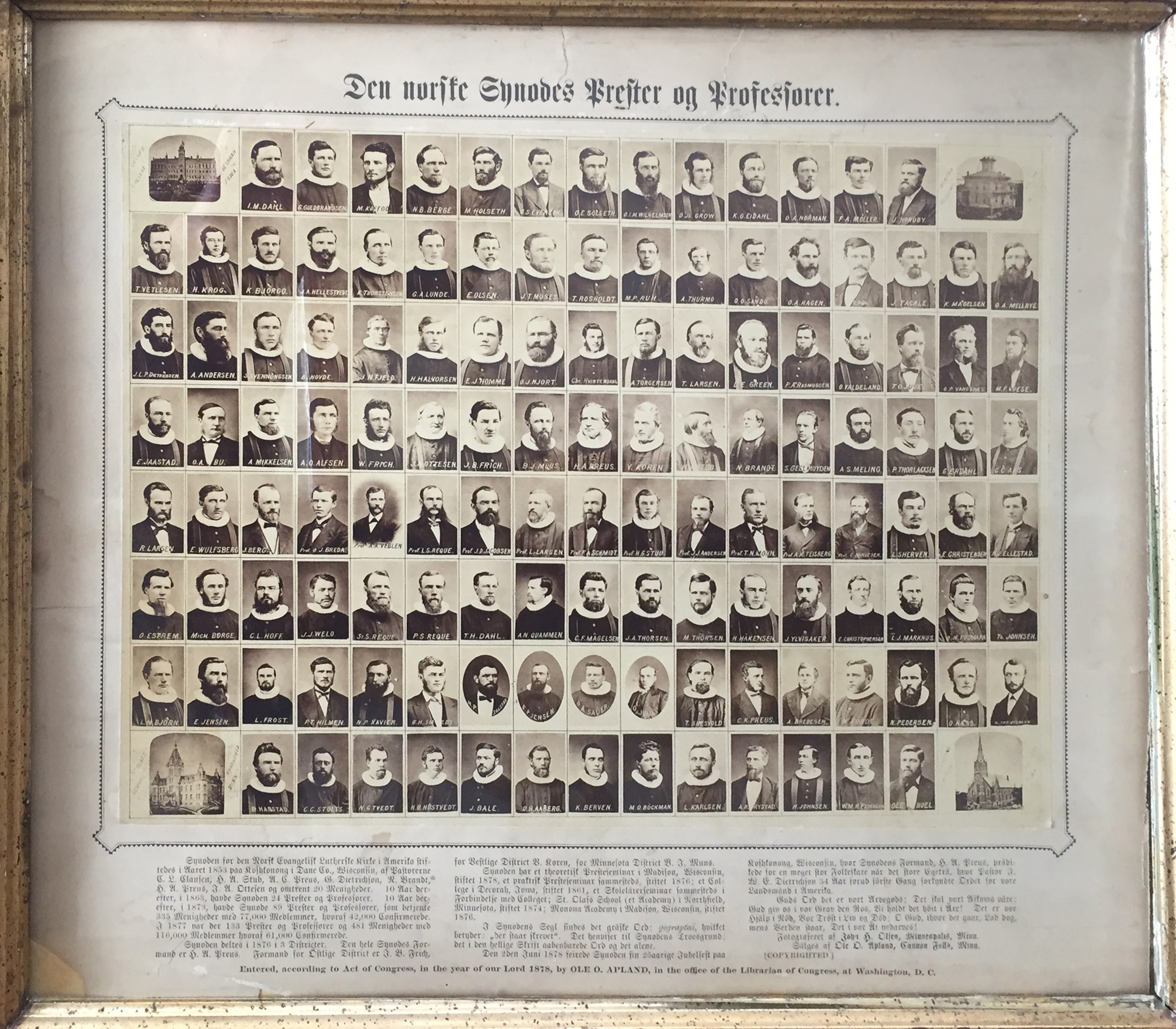
  • Pastor Peder Knudsen Mellang

    Source, page 612

    Through our “Kirketidende” we have in recent times been able to send many stories about new workers who have been sent out in the Lord’s Vingaard. We know that these businesses have brought joy to our society among all those who have an open eye to the great need in the spiritual field and have learned to ask the master of the harvest to drive out more and more workers in his great harvest. This time we have the heavy message to bring to our readers that the Lord in his wisdom has called one of our young workers away from his work in this great harvest. Pastor Mellang, who in June last year completed the Theological Exam at our Luther Seminar and on the 20th of July was ordained Priest of the Hudson, River Falls, Stillwater and South Stillwater Norwegian Evangelical Lutheran Congregations, died at his home in Hudson Saturday morning the 12th of September . Past writes about his illness and last days. Rosenquist, who was with him at the deathbed, told us the following:
    Ever since the new beautiful Church in Hudson, for which he worked with tireless zeal both as a Student and Priest of the Congregation, was consecrated on the 28th of June d.A., Mellang felt less well. Sometimes he had to refrain from preaching as a result. He did not dare go to the Priests’ Conference in Decorah. Nevertheless, he worked diligently and encouragingly all his hard work on the work that the Lord had put him in until Sunday, August 30, when he preached in both Hudson and River Falls. Those who heard this last sermon of his say that it was as if the Lord had in a marvelous way directed his thoughts to the things which were soon to enter without the foresight of any man. Over a free text he had spoken with life and warmth about the divorce, death prepared believing brothers and sisters, about the reunion with God in heaven and the joy they would then again enjoy.
    For a long time this sermon will be remembered by his friends, of whom he had many; he won the love and esteem of all with whom he came in contact. Coming back from River Falls, he felt very exhausted and itchy. Partly he was lying down, partly he was up. On Tuesday evening he went to bed too well, and the disease increased daily, without the doctor giving up hope of recovery.
    Wednesday morning, the 9th of September, I, his immediate neighbor and a member of the same Special Conference, traveled to Hudson to see him. Mellang was then so weak that he himself declared that he could not see me. The next day the doctor discovered a cancerous abscess in his stomach and thus gave up hope of being able to save his life.
    Friday morning I was asked to get on the first train. Arriving at the sickbed I true the dear Brother in a heavy sleep; but exhausted as he was, he still understood what was being done to him. I then added in a few words to remind him of the glorious gospel which he had preached to others, and asked him if he also now consoled himself there and would die in the faith thereon. To this he replied with a nod and said Yes. After uniting us in prayer for him and commending him to the grace and warmth of God in Christ Jesus, his Savior, I reminded him again of the many glorious promises the Lord had given to those who believe, and read a few psalms that speak of Death and glory after the same for all those who die in the Lord, among whom also Nr. 412 in our Psalm … which was one of Mellang’s beloved hymns, He always felt happy and calm when the Word of God was preached to him.
    But more and more it seemed to paint towards the End. Repeatedly, when he saw the hard cramps, we waited for it to be over. However, when these seizures were over, he came more to himself again, and again and again he asked me to comfort him with the word of God.
    After thus having fought and fought the battle of death until Kl. 5 Saturday morning, he calls me in from the adjoining Room. I step near him and ask, “Are you going to God now?” To this he answered a resounding yes, lay down on the pillow and thus remained lying with sunken hands until he Kl. 51/2 calmly fell asleep into the Name of Jesus.
    A truly heavy blow both to the deeply grieved and yet calm and settled young wife, as well as to the congregations, which are now left without a shepherd and…

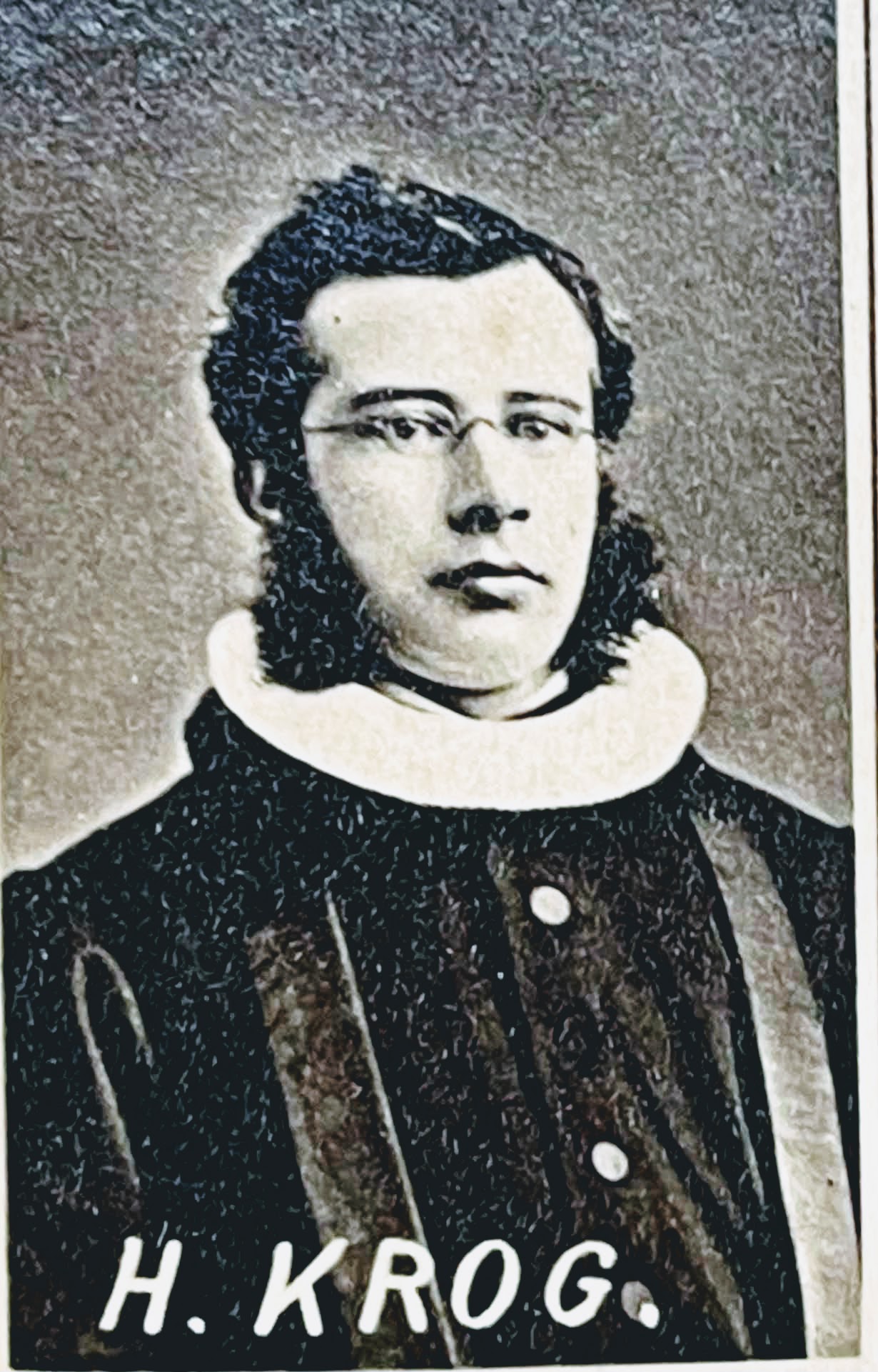
  • Hans Jakob Grøgaard Krog

    Pastoral Vitae

    Hans Jacob Grøgaard Krog was born in Flekkefjord on June 10, 1845, to his parents, Johan Fredrik Vilhelm Krog and wife, Charlotte Lovise Amalie, née Grøgaard.

    He completed Flekkefjord’s grammar school and Stavanger’s Latin school and began his study of theology soon after passing the “Examen artium” in 1863 and two further examinations in 1864. He had taken up his studies in that field without being fully committed, and it did not take long before he began to doubt his decision. Troubled by such misgivings, he abandoned his studies and his intention to become a pastor.

    He applied for and received a teaching position, first at one of Kristiania’s Latin schools, and later at Trondheim’s grammar and middle school, while eagerly pursuing his interest in the living language. His path led him during this time further and further away from God and His Word, and more and more into the darkness of unbelief. He attended worship service and Holy Communion less and less, and became more and more indifferent to the study of the Bible. But thanks be to the Lord, who overcame his resistance and led him to reflect on his ways. After living for a longer period of time in the house of a Christian association he finally reached the decision to once again take up his study of theology, and it soon became his most passionate pursuit. One of the reasons for returning to his studies was his desire to journey to America as pastor and help his fellow countrymen living there. In November, 1872, on the advice of Pastor Ottesen, he departed for St. Louis, with the intention of completing his studies there, but by Easter, 1873, he had left due to illness. Later, he resided at the homes of a number of pastors of the Norwegian Synod, where he assisted them in the performance of their duties and continued his studies. After receiving a call from the congregation of Our Savior’s Church in Minneapolis to serve in the absence of Pastor Stub, he took his theological examinations in Decorah on the 13th, 14th, and 15th of March, and today he is to be ordained into the holy office of pastor. As he prepares now to embark on his important life’s work with its many responsibilities, he is more aware than ever before of his own frailness, and from the bottom of his heart he asks the congregation to pray for him. At the same time he is convinced that the same Lord who called and led him to serve His church in this country will also give him the courage and strength to remain a steadfast toiler in His vineyard. It is now and will forever remain his prayer, for as long as the Lord allows him to remain in his calling, that his life’s work be to God’s glory and to the true benefit of his fellow man.

Hans Jakob Grøgaard Krog was born in Flekkefjord, Norway. After having obtained his master’s degree, he took up the study of theology but discontinued this, however, and became a teacher in Christiania and later in Trondhjem. Rev. J.A. Ottesen had often written in Norwegian papers concerning the scarcity of clergymen among Norwegians in America, and this led Krog to take up the study of theology anew. In 1872 he emigrated to America and was ordained into the ministry in 1874. His first call took him to Minneapolis, but a year later found him in Menominee, Wis., where he remained until 1890, when the Church Council elected him to a professorship at Luther College, where he remained for six years. He taught Norwegian, Religion, Latin, and French, besides taking, together with his wife, a very active part in the church work in and about Decorah. Rev. Krog was intensely interested in mission work, especially in the seamen’s mission. In 1902 he resigned his pastorate, which he had held at Ossian since 1896, in order to devote all his time to the mission work. In this capacity he labored unselfishly to the last. In the death of Rev. Krog the cause of Christian education has lost one of its warmest friends and supporters and one whose labors and influence have promoted and strengthened the highest and best elements in the field of education.

Hans Jakob Grøgaard Krog

Designed with WordPress